DVLA Change of Ownership in Ghana: Documents, Steps and Mistakes to Avoid
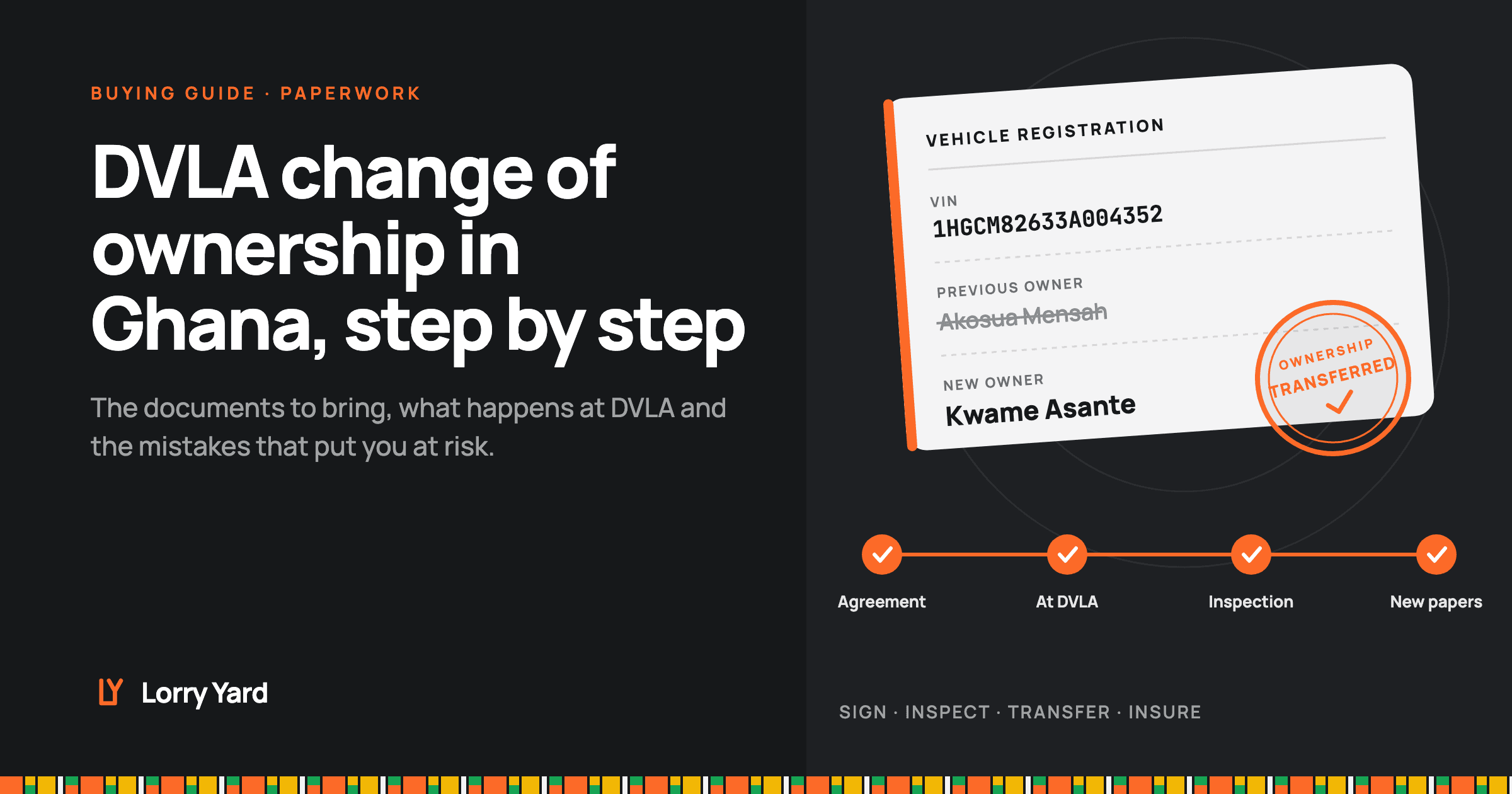
To change vehicle ownership in Ghana, the buyer and seller go to a DVLA office (ideally together) with both parties' Ghana Cards, a signed sale agreement and the vehicle's registration documents. They complete the transfer forms, present the vehicle for a DVLA inspection, pay the transfer fee, and DVLA issues updated registration documents in the buyer's name. Until that's done, the sale isn't fully finished, for either side.
Many people skip or delay this step. It's one of the most expensive mistakes in Ghana's vehicle market. This guide explains what to bring, what happens at DVLA, and how to protect yourself during the handover.
Still choosing a vehicle? Read How to Buy a Used Car Safely in Ghana first.
Why the transfer matters for buyers and sellers
For the buyer: until DVLA records you as the owner, the law still sees the seller as the owner. You may struggle to insure the vehicle properly, renew its registration, or sell it later. If the seller wasn't the true owner, the DVLA check is also where that problem is most likely to surface.
For the seller: if the vehicle stays in your name, you may be linked to anything the new driver does with it, from traffic offences to crimes. Completing the transfer is how you formally end your responsibility.
The safest approach: agree before payment that the transfer will be done together, and set a date.
Documents you'll need
Requirements can change and may vary between offices, so confirm with DVLA before you go. In general, bring:
| Document | Who brings it | Notes |
|---|---|---|
| Ghana Card | Buyer and seller | Originals, plus copies |
| Vehicle registration documents | Seller | Including the current registration certificate |
| Signed sale agreement | Both | Names, Ghana Card numbers, VIN, registration number, price, date, signatures |
| Completed transfer forms | Both | Available at DVLA offices and through DVLA's online services |
| Roadworthy certificate | Seller | Must be for the same VIN as the vehicle |
| Customs documents | Seller | For imported vehicles |
| Passport photos | Buyer | Bring a few, in case they're requested |
| The vehicle itself | Seller or buyer | DVLA inspects it physically |
Before you leave home: check that the VIN on every document matches the VIN on the vehicle, character for character. A mismatch will stop the transfer, and may point to a bigger problem. Our VIN check guide shows you how.
Step by step: transferring ownership at DVLA
1. Sign a proper sale agreement
Do this before or on the day of payment. Include both parties' full names and Ghana Card numbers, the vehicle's make, model, year, VIN and registration number, the price, the payment method, the date, and both signatures. A witness signature adds protection.
2. Go to DVLA together
Visiting together is the simplest way to prove both parties agree to the transfer, and it lets DVLA confirm identities on the spot.
3. Complete the transfer forms
Fill in the forms carefully. Names must match your Ghana Cards exactly.
4. Present the vehicle for inspection
DVLA physically inspects the vehicle to confirm its details and that the person transferring it is the owner. This is where mismatched VINs, altered documents or questions about customs history can come up.
5. Pay the transfer fee
Pay only at the official DVLA point of payment and get an official receipt. Fees depend on the vehicle and can change, so check DVLA's current rates.
6. Collect the updated documents
Once approved, DVLA issues the registration documents in the buyer's name. Check every detail before you leave.
7. Update the insurance
The buyer should put insurance in their own name straight away. The seller should cancel or transfer their policy.
Mistakes to avoid
- Paying in full and "doing DVLA later". Agree a date for the transfer before you pay, and go together.
- Handing over original documents before payment has cleared. Sellers, confirm the money is in your account first. Don't rely on an SMS alert alone.
- Using unofficial "connection men" to speed things up. Pay only official fees at official points, and get receipts. Unofficial helpers are a known route to fraud.
- Not checking the VIN before going to DVLA. Mismatches waste a trip at best, and reveal a stolen vehicle at worst.
- Buying from someone who isn't the registered owner, without written authority. If the seller's name isn't on the documents, ask why, and get the owner's written authorisation.
- Forgetting insurance. A vehicle that has changed hands but not insurance is a risk to everyone on the road.
How LorryYard helps before you get to DVLA
The transfer goes smoothly when the vehicle's story is clear from the start. On LorryYard:
- Every listing is tied to the vehicle's VIN, and each VIN can be listed only once. You know exactly which vehicle you're dealing with, and there are no duplicate ads confusing who the real seller is.
- Verified businesses have had their identity checked and carry a trust badge.
- A VIN history report can flag theft, liens and recalls before you ever reach DVLA.
Transfer checklist
- VIN matches on the vehicle and every document
- Sale agreement signed by both parties, including the VIN
- Payment confirmed in the seller's account
- Both Ghana Cards, originals and copies
- Vehicle registration, roadworthy and customs documents
- Transfer forms completed
- Vehicle presented for DVLA inspection
- Official fee paid, with receipt
- New documents in the buyer's name, checked for errors
- Insurance updated
Frequently asked questions
Do both the buyer and seller need to be present at DVLA?
It's strongly recommended. Being there together is the easiest way to confirm identity and consent. If the seller can't attend, check with DVLA what written authority and documents are required.
How long does a DVLA ownership transfer take?
It depends on the office, the vehicle's history and whether all documents are in order. Having everything ready, with matching VINs, is the best way to avoid delays.
How much does it cost to change vehicle ownership in Ghana?
DVLA charges a transfer fee that depends on the vehicle and can change. Check the current fee with DVLA, and pay only at official payment points.
What if the seller refuses to do the transfer?
Don't pay in full until the seller agrees to a transfer date. If you've already paid, keep your sale agreement and payment records and seek advice from DVLA or a lawyer.
Can I sell a vehicle that isn't registered in my name?
Only with proper written authority from the registered owner, and it complicates the transfer. It's usually safer to register the vehicle in your name first.
Ready to buy or sell?
Find vehicles linked to their VIN, with no duplicates, or list your own in a few minutes.
Browse vehicles → · Post your ad →
This guide is general information, not legal advice. DVLA requirements and fees can change. Always confirm with DVLA before your visit.