How to Buy a Used Car Safely in Ghana: The Complete 2026 Guide
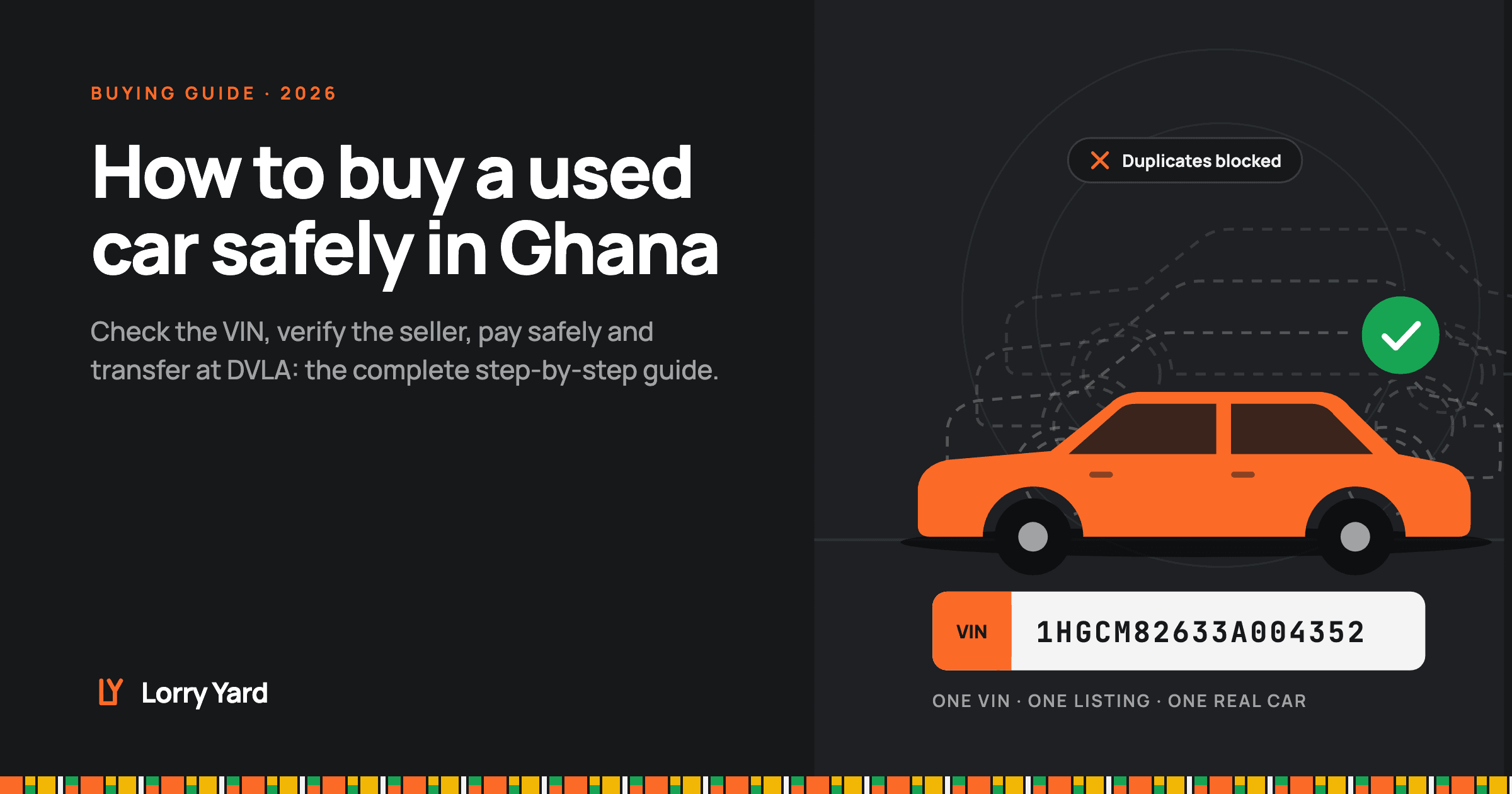
To buy a used car safely in Ghana, confirm the vehicle's VIN matches the car and every document, verify that the seller is the real owner, inspect the car in person with a mechanic, pay only through a traceable method once the paperwork checks out, and complete the change of ownership at DVLA. This guide walks you through each step, from the first search to driving home, so your money and your vehicle stay protected.
Whether you're buying your first Toyota Corolla in Accra, a Sprinter bus for your trotro business in Kumasi, or a car for family back home while you live abroad, the rules are the same. Take your time, check everything, and never let anyone rush you.
Why safety comes first when buying a car in Ghana
Most vehicle sales in Ghana are honest. But the ones that go wrong can cost you everything you saved.
The risks are real. In August 2025, Ghana's Economic and Organised Crime Office (EOCO) said joint operations with the US FBI had led to the seizure of more than 100 vehicles believed to have been stolen abroad and brought into Ghana for resale. Some of the people who bought those cars had done their homework and still lost both their money and the vehicle.
The most common problems buyers face are:
- Fake sellers who advertise a car they don't own, collect a deposit, and disappear.
- Stolen vehicles with altered VINs or forged papers.
- Duplicate and cloned ads, where the same car (or the same photos) is posted many times by different "agents", each adding their own commission or running their own scam.
- Hidden damage, such as flood or accident repairs, and rolled-back mileage.
- Paperwork traps, including customs duty that was never paid, or a vehicle still owned by a bank or loan company.
The good news: every one of these can be caught if you follow the steps below.
Step 1: Start on a platform where every car is unique
Where you search matters. On many classifieds sites and social media groups, the same vehicle can appear in dozens of ads at different prices. You can't tell who the real owner is, or whether the car exists at all.
On LorryYard, every vehicle is tied to its Vehicle Identification Number (VIN), and each VIN can only be listed once. When a seller posts an ad, they upload the car's VIN. If that VIN is already on the platform, the new listing is blocked. That means:
- No duplicates. One car, one listing, one seller. You won't find the same vehicle posted five times at five prices.
- No cloned ads. Scammers can't copy a genuine listing's photos and details and re-post them as their own.
- A clear record. The VIN on the listing is the same number you'll check on the car and its documents, so you know from the start which vehicle you're dealing with.
You can also filter for verified businesses only. Dealers and garages with a verification badge have had their identity checked by LorryYard.
Important: a unique, VIN-linked listing is a strong starting point, but it doesn't replace your own checks. Always complete Steps 2 to 7 before you pay.
Browse VIN-linked vehicles on LorryYard →
Step 2: Know the fair price before you call
A price that's far below the market is the biggest red flag in any car deal. EOCO has warned that luxury vehicles offered at a fraction of their real value should immediately raise suspicion.
Before you contact a seller:
- Look at several listings of the same make, model and year.
- Note the price range in GH₵, and how mileage and condition change it.
- Be cautious of any car priced well below that range, especially popular targets like the Honda CR-V, Toyota Land Cruiser, Range Rover and high-end BMWs.
If a seller explains a low price with a story ("I'm travelling tomorrow", "it's my late uncle's car", "I need cash urgently"), slow down. Urgency is how scammers get you to skip checks.
Step 3: Check the VIN on the car and on every document
The VIN is a 17-character code unique to each vehicle, sometimes called the chassis number. It is the single most important thing to check.
Where to find it on the car:
At the base of the windscreen on the driver's side (visible from outside)
On a sticker or plate inside the driver's door frame
On the engine bay or firewall
On some cars, on seatbelt labels and other parts
Where to find it on the papers:Vehicle registration documents (DVLA)
Customs documents
The roadworthy certificate and insurance documents
All of these must match exactly. A single different character, scratched-out numbers, stickers that look replaced, or a VIN plate that looks loose or newer than the car are serious warning signs. EOCO lists mismatched VINs across different parts of the car as a key sign of a stolen vehicle.
Then run a history check. A VIN history report can show whether the car has been reported stolen, has a lien (money still owed on it), has recall notices, or has a history of accidents abroad. You can run a VIN check on LorryYard before you meet the seller. For high-value vehicles, EOCO also advises confirming with official authorities before you pay.
Step 4: Verify the seller is the real owner
A genuine seller has nothing to hide. Ask for:
- Their Ghana Card, and check that the name matches the name on the vehicle registration documents.
- The original documents, not photos or photocopies.
- The car's history: how long they've owned it, where it was bought, and any repairs.
If the seller is not the registered owner, ask why, and ask for written authorisation from the owner. Be wary of anyone who avoids questions, won't show ID, or keeps changing their story.
On LorryYard, look for the verified business badge when buying from a dealer. Verified businesses have a public storefront page, so you can see their other listings and how long they've been trading.
Step 5: Inspect the car in person, with a mechanic
Never buy a car you haven't seen. Photos can be old, edited or of a different vehicle.
Meet safely:
Choose a busy public place in daylight, or a reputable garage.
Bring a friend or family member.
Don't carry the full payment with you to a first viewing.
Bring a trusted mechanic to check:Engine and gearbox (listen for knocks, look for leaks and smoke)
Signs of flood damage: rust under the seats, a damp smell, water lines, corroded wiring
Signs of accident repairs: uneven gaps between panels, paint that doesn't match, welding marks
Tyres, brakes, suspension and air conditioning
Mileage that makes sense for the car's age and wear
A missing rear-view mirror, which EOCO notes can be a sign a GPS tracker was removed
Take a test drive on different kinds of roads, if you can, and try every button, light and window.
Step 6: Pay safely, and only after the paperwork checks out
This is where most money is lost. Follow these rules:
- Never pay a deposit to "hold" a car you haven't seen. This is the most common scam in Ghana's vehicle market.
- Pay only after the VIN, documents, seller ID and inspection all check out.
- Use a traceable method, such as a bank transfer, rather than cash. Keep every receipt.
- Confirm the payment has arrived before the seller hands over keys and documents. Sellers: never trust a mobile money SMS alert alone; check your actual balance.
- Sign a written sale agreement that includes both parties' names and Ghana Card numbers, the VIN, the registration number, the price, the date, and both signatures. Ideally, have a witness sign too.
Step 7: Complete the change of ownership at DVLA
Until the vehicle is registered in your name, you're not fully protected. In general, the process involves:
- The buyer and seller visiting a DVLA office, ideally together
- Completing and signing the transfer forms
- Presenting both parties' Ghana Cards, the sale agreement and the vehicle's documents
- A DVLA physical inspection of the vehicle to confirm ownership and details
- Paying the transfer fee
- Receiving the updated vehicle registration documents in the buyer's name
Requirements and fees can change, so check the latest details with DVLA before you go. Also remember to update or take out your insurance from the day you take the car.
Your safe car-buying checklist
Screenshot this and keep it on your phone:
- The listing is unique, and the seller's VIN is on it
- The price is in line with similar cars
- The VIN matches on the windscreen, door frame, engine and every document
- A VIN history report is clean: not stolen, no lien
- The seller's Ghana Card matches the registered owner
- A mechanic has inspected the car, and you've taken a test drive
- No deposit was paid before seeing the car
- Payment is traceable, and a signed sale agreement includes the VIN
- DVLA change of ownership is complete, and insurance is in your name
Frequently asked questions
Is it safe to buy a car online in Ghana?
Yes, if you use the internet to find the car, not to finish the deal. Search online, then check the VIN, meet the seller, inspect the car and complete payment and DVLA paperwork in person. Choose platforms where each vehicle is linked to its VIN and listed only once, so you know you're dealing with one car and one seller.
How can I tell if a car is stolen in Ghana?
Warning signs include VINs that don't match across the car and its documents, altered or tampered papers, a seller who won't show ID, and a price far below market value. Run a VIN history check, and for high-value vehicles, confirm with the relevant authorities before paying.
What documents should I get when buying a used car in Ghana?
You should receive the vehicle's original registration documents, customs documents where applicable, the roadworthy certificate, a signed sale agreement that includes the VIN, and, after the transfer, the updated DVLA registration documents in your name.
Why does LorryYard allow only one listing per VIN?
Because duplicate ads are one of the easiest ways for scammers and middlemen to confuse buyers. When each vehicle can only be listed once, you see one car, one price and one seller, and you can match the VIN on the listing to the car in front of you.
Should I pay a deposit to hold a car?
No, not before you have seen the car in person and checked its VIN and documents. Requests for a deposit to "hold" a vehicle are one of the most common scams in Ghana.
Can I buy a car in Ghana while living abroad?
Yes, but have a trusted person in Ghana inspect the car and meet the seller for you, buy from verified businesses where possible, and run a VIN history check yourself before any money is sent.
Find your next vehicle, safely
Every vehicle on LorryYard is linked to its VIN, and every VIN can be listed only once. No duplicates, no cloned ads, just real vehicles from private sellers and verified businesses across Ghana.
Browse vehicles on LorryYard →
Selling instead? Post an ad in a few minutes for as low as GHS 25 →
This guide is for general information and doesn't replace legal advice or official guidance from DVLA, the Ghana Police Service or EOCO. If you suspect a vehicle is stolen or you've been targeted by fraud, report it to the Ghana Police Service.