Car Scams in Ghana: 9 Red Flags Every Buyer and Seller Should Know
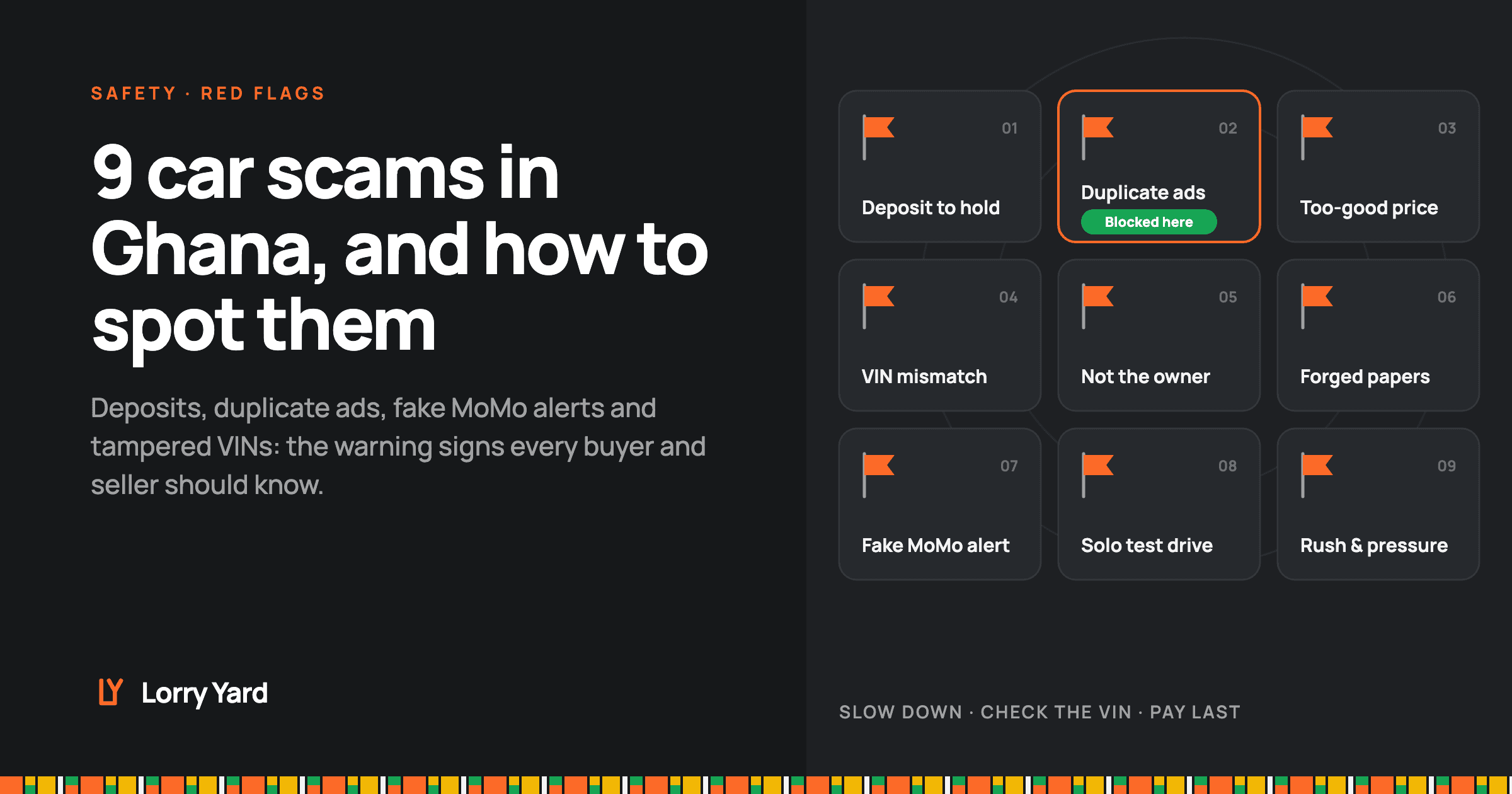
The most common vehicle scams in Ghana are deposits for cars that don't exist, duplicate or copied ads, prices that are too good to be true, stolen vehicles with tampered VINs or forged papers, fake payment alerts, and sellers who aren't the real owner. You can avoid almost all of them with one rule: see the vehicle, match its VIN to the papers, and move money only when everything checks out.
Fraud in the vehicle market is real and organised. In August 2025, Ghana's Economic and Organised Crime Office (EOCO) said joint operations with the US FBI had led to the seizure of more than 100 vehicles believed to have been stolen abroad and resold in Ghana. Some buyers lost both their money and the vehicle.
Here are the nine red flags to watch for, and what to do about each.
1. "Send a deposit to hold the car"
The scam: The seller says many people are interested, so you should send a deposit by MoMo to reserve the car before you see it. After the payment, they disappear.
What to do: Never pay anything for a vehicle you haven't seen in person, with its VIN and documents checked. A genuine seller will let you view first.
2. The same car, posted many times
The scam: One vehicle appears in several ads, at different prices, with different phone numbers. Some are middlemen adding a mark-up. Others are scammers using copied photos of a car they've never touched.
What to do: Search for the same photos or details in other ads. Ask for the VIN and check it matches the vehicle when you view it.
How LorryYard stops it: every listing is tied to its VIN, and each VIN can only be listed once. There are no duplicate or cloned ads for the same vehicle on the platform: one car, one listing, one seller.
3. A price that's too good to be true
The scam: A late-model SUV or luxury car at a fraction of its market value, with a story attached: "I'm travelling tomorrow", "It's my late uncle's car", "I need cash urgently". EOCO has warned that vehicles offered far below their real value should immediately raise suspicion.
What to do: Compare prices for the same make, model and year. If it's far below the range, walk away or slow right down.
4. A VIN that doesn't match
The scam: A stolen vehicle carries a VIN that's been ground off and re-stamped, a VIN plate from another vehicle, or documents with a different VIN altogether.
What to do: Check the VIN in at least three places on the vehicle, and on every document. EOCO lists mismatched VINs as a key warning sign. Then run a history report. Our VIN check guide shows you how.
5. A seller who isn't the owner
The scam: The person selling isn't the registered owner, can't show ID, or keeps changing their story about where the car came from.
What to do: Ask for the seller's Ghana Card and make sure the name matches the registration documents. If they're selling for someone else, ask for written authority from the owner. Walk away if they refuse.
6. Papers that look "off"
The scam: Forged or altered registration, customs or roadworthy documents, often shown only as photos or photocopies.
What to do: Insist on the original documents. Look for alterations, mismatched fonts, spelling errors and VINs that don't match. For high-value vehicles, EOCO advises confirming with the authorities before you pay.
7. Fake payment alerts (a scam against sellers)
The scam: The "buyer" shows an SMS alert or a screenshot saying they've paid, then drives off with the car and the documents. No money ever arrived.
What to do: Check your MoMo balance or banking app directly. Hand over keys and documents only after the money has cleared into your account. For large sums, prefer a bank transfer.
8. The test drive that never comes back
The scam: A friendly "buyer" asks to test-drive alone, and disappears with your vehicle.
What to do: Check the buyer's Ghana Card and driving licence, take a photo of their ID, ride along on every test drive, and keep the spare key.
9. Pressure, urgency and secrecy
The scam: Every scam above relies on rushing you: "Pay now or lose it", "Don't tell anyone about this price", "My agent will handle everything."
What to do: Slow down. A genuine deal will still be there tomorrow. Bring a friend, a mechanic, or both, and never let anyone stop you from checking the VIN and the papers.
The anti-scam checklist
- I've seen the vehicle in person before paying anything
- The listing is unique, with a VIN, and not duplicated elsewhere
- The price is in line with similar vehicles
- The VIN matches on the vehicle and every document
- A VIN history report shows no theft or lien
- The seller's Ghana Card matches the registered owner
- Documents are originals, with no alterations
- Payment is traceable and confirmed in the account, not by SMS
- The DVLA transfer is done together
Frequently asked questions
What is the most common car scam in Ghana?
Requests for a deposit to "hold" a car you haven't seen. Never send money before viewing the vehicle and checking its VIN and documents.
How do I know if a car ad is fake?
Warning signs include the same photos in other ads, a price far below the market, a seller who won't let you view the car or share the VIN, and pressure to pay quickly.
How can I check if a car is stolen in Ghana?
Match the VIN on the vehicle to every document, run a VIN history report, and for high-value vehicles, confirm with the authorities before paying.
How does LorryYard protect buyers from duplicate ads?
Every vehicle is linked to its VIN when it's listed, and each VIN can only be listed once. The same car can't appear twice on LorryYard.
Where do I report a vehicle scam in Ghana?
Report it to the Ghana Police Service. If it involves a LorryYard listing, also contact us at support@lorryyard.com.
Buy and sell where every car is real
On LorryYard, every vehicle is tied to its VIN, and no vehicle appears twice. Buy from private sellers and verified businesses with more confidence.
Browse vehicles → · Read our full buying guide →
This guide is for general information and doesn't replace official guidance from the Ghana Police Service or EOCO.